According to a survey data and report from Crocodile Specialist Group (CSG IUCN) with fewer than 1,000 Siamese crocodiles (Crocodylus siamensis) remaining in the wild, the species is listed as Critically Endangered by the the International Union for Conservation of Nature (IUCN).
The Xe Champhone Wetland located in Champhone District, Savannakhet Province represents the largest of Lao PDR’s two Ramsar sites (Wetland of International Importance) and is home to an abundance of aquatic biodiversity, as well as one of the world’s last remaining populations of the critically endangered Siamese crocodile, endangered turtle species and wetland birds.
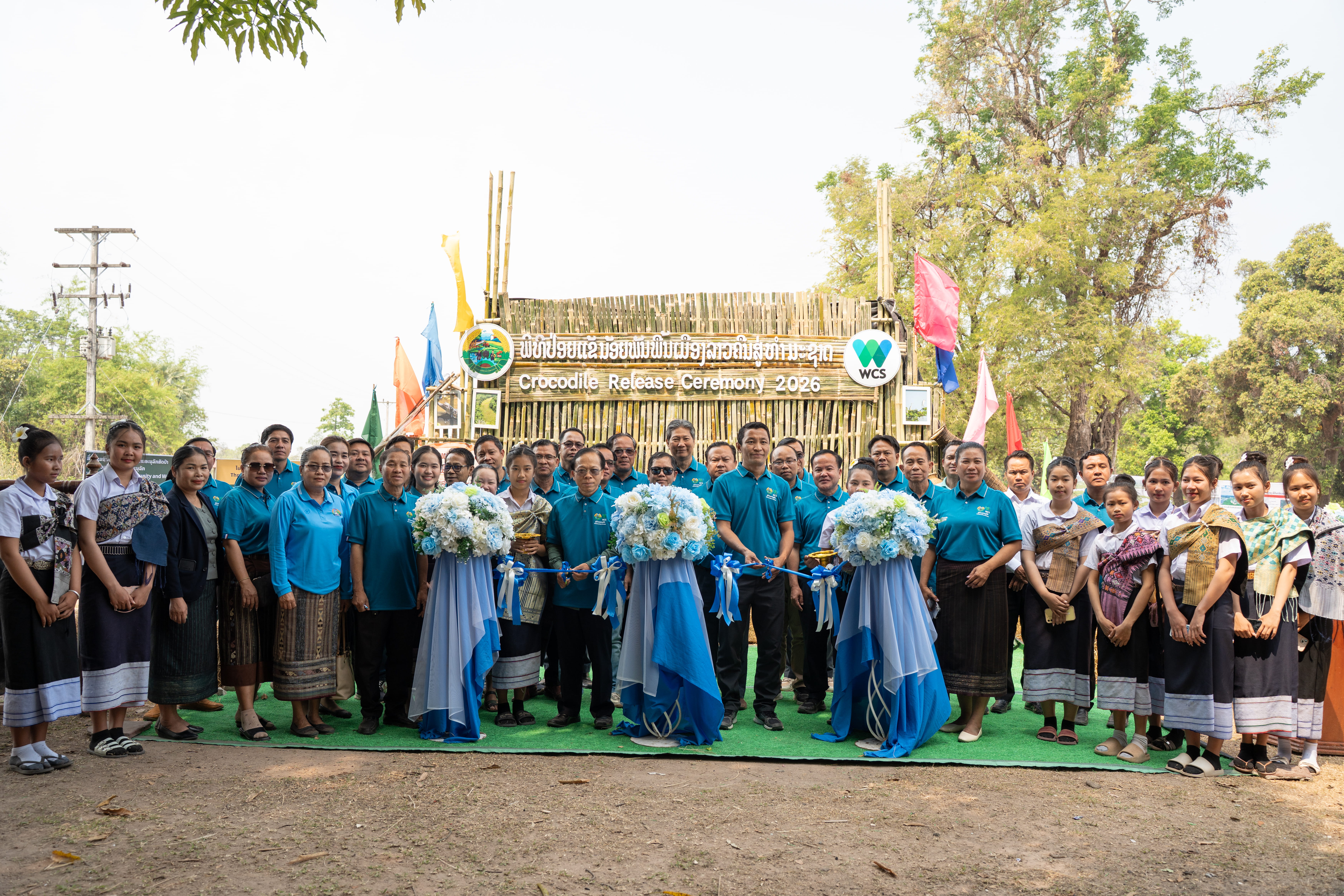
This year’s crocodile release ceremony was held in Donyanong Village, Xonnabouly District, Savannakhet Province, and was hosted by Mr. Soubin Luangduang, Chairperson of the District Administration Committee of Xonnabouly District. A total of 56 crocodiles were released into the wild.
The event brought together over 100 participants, including representatives from the Department of Forestry under the Ministry of Agriculture and Environment, Provincial Agriculture and Environment Office, Dr. Santi Saypanya, the Country Director of WCS Lao PDR, representatives from District Administration Committees from the four target districts (Champhone, Xonnabouly, Songkhone, and Xaybouly), members of the project implementation and management committees at both provincial and district levels, as well as target community members from 27 villages participating.
Mr. Soubin Luangduang, Chairperson of the District Administration Committee of Xonnabouly District said in his opening remarks: “Based on the history of these Siamese crocodiles, local communities have a long history with them. In the past, these crocodiles lived and fed on aquatic species in natural water bodies such as ponds, oxbows and wetlands. This species has unique characteristics that distinguish it from other crocodile species, including its environmentally friendly behavior, distinctive coloration and patterns and its small to medium size. Historically, this species has not been known to attack humans or livestock.”
“This ceremony is considered an important activity for the conservation and restoration of the Siamese crocodiles, as well as for the management of a species that is at risk of extinction in the future. The ceremony also included religious rites performed by monks, which help foster spiritual confidence and respect for the conservation of this species.” Mr. Soubin Luangduang continued.
The wetland and its unique biodiversity, including the Critically Endangered Siamese crocodile, are culturally, ecologically and economically important to the local community and Laos. While crocodiles are not hunted, they remain under threat due to entanglement in fishing nets, the clearance of wetlands and seasonal draining of habitat for expanding dry-season rice cultivation. The Siamese crocodile is not considered to be an aggressive species and is not a threat to humans. Communities that reside close to the species’ habitat continue fishing and farming in the Xe Champhone wetlands as crocodiles hold a spiritual significance and bring good luck to them.
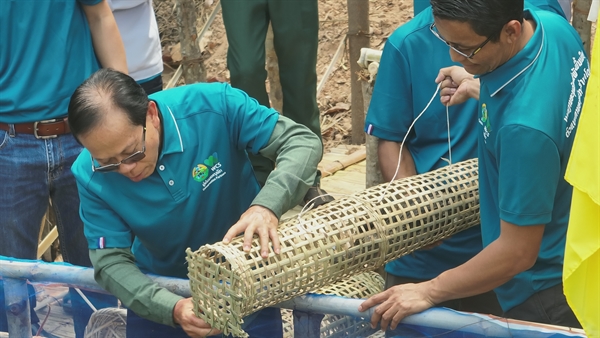
A dedicated conservation program for the Siamese Crocodile in close collaboration with the local communities and government is in place in the four target districts (Xonnabouly, Champhone, Songkhone, and Xaybouly) of Savannakhet Province aiming to restore a viable population of this species.
Eggs are collected and transported to the village administration office for incubation at ambient temperature for about two months. Once hatched, the baby crocodiles will be raised for about 75-80 days – at which time they will exceed 1 meter in length – and then released back into the wetlands.189 small crocodiles are currently being nursed by the crocodile conservation team at the village level.
Since the start of the program, a total of 239 crocodiles have been successfully released back into the Xe Champhone wetlands. Around 10 nests are being found each year and based on these nest counts, an estimated population of 300-350 Siamese Crocodiles including small crocodiles inhabit the Xe Champhone Wetlands.